Lincoln County Dog Registration Information
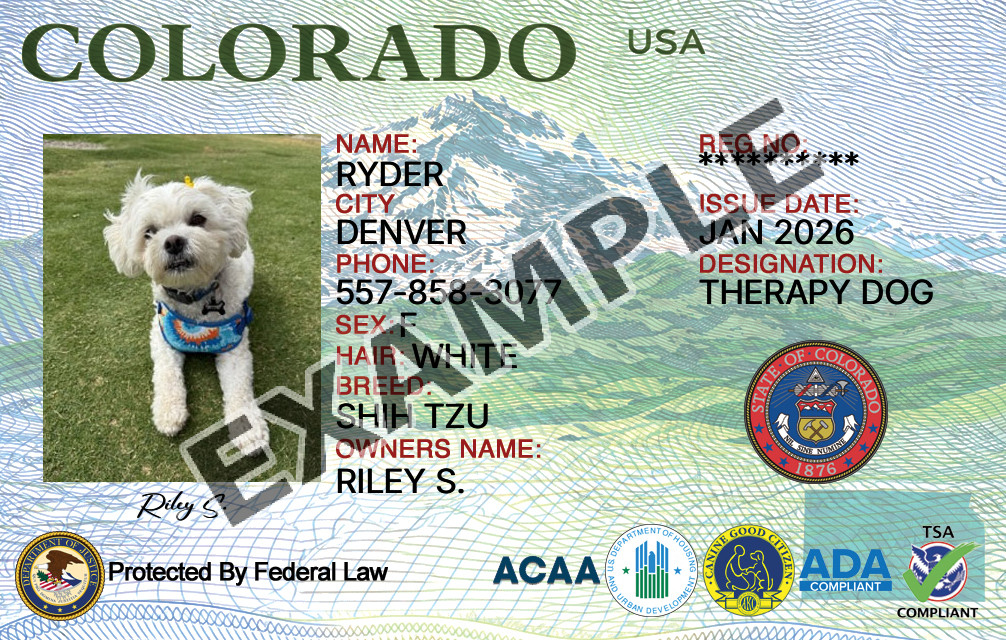
Service Dogs and Emotional Support Animals in Lincoln, Colorado
If you’re searching where do I register my dog in Lincoln County, Colorado for my service dog or emotional support dog, the key point is that “registration” usually means local dog licensing (a county or city requirement tied to rabies vaccination and identification tags), not a special federal registry. In Lincoln County, Colorado, dog licensing and animal-related enforcement may involve county offices and, depending on where you live, your town or municipality.
- Service dogs and emotional support animals (ESAs) are not “registered” through one universal federal government registry.
- You may still need a dog license in Lincoln County, Colorado (or within your municipality) and proof of current rabies vaccination.
- If you live inside town limits, local rules can differ from unincorporated areas—when in doubt, confirm with the appropriate local office listed below.
Where to Register or License Your Dog in Lincoln County, Colorado
The offices below are official local government contacts that serve Lincoln County, Colorado residents and can help you confirm where to register a dog in Lincoln County, Colorado, what documentation is required, and whether your specific address is covered by county processes or a municipal ordinance.
Lincoln County Public Health
Hugo, CO 80821
Closed for lunch: 12:00 pm – 1:00 pm
Why this office matters: dog licensing requirements often connect to public health rules such as rabies vaccination documentation. This office can help you confirm local expectations and direct you to the correct licensing authority for your address (county vs. municipal).
Lincoln County Sheriff’s Office (Animal-related enforcement / dispatch referrals)
Hugo, CO 80821
Why this office matters: for many rural counties, animal control functions (complaints, stray dogs, bites, enforcement) may be coordinated through the Sheriff’s Office. They can help confirm the correct process for an animal control dog license in Lincoln County, Colorado questions or point you to the proper office.
Hugo Town Hall (Municipal animal licensing/ordinances—if you live in Hugo)
Hugo, CO 80821
Friday–Sunday: Closed
Why this office matters: residents inside municipal limits may have town-specific rules. If your home address is within Hugo, confirm whether your dog licensing requirements are handled by the Town, the County, or a combination (especially for tags, renewals, and enforcement).
Dog licensing requirements in Lincoln County, Colorado can vary by municipality. If you’re in another incorporated area or an unincorporated part of the county, start with Lincoln County Public Health or the Lincoln County Sheriff’s Office to confirm the correct licensing path for your exact address.
Overview of Dog Licensing in Lincoln County, Colorado
What “registering a dog” usually means
When people ask where to register a dog in Lincoln County, Colorado, they are typically referring to a dog license (sometimes called a dog tag). A local license helps identify the dog and owner, supports rabies-control compliance, and can simplify reunification if your dog is lost.
County vs. city licensing within Lincoln County
Lincoln County includes incorporated communities as well as unincorporated areas. In Colorado, dog-related rules are often set at the local level, which means:
- If you live inside a town/city limit, the municipality may have its own rules for dog tags, renewal cycles, and fees.
- If you live in unincorporated Lincoln County, the county (or county-designated office) may handle requirements and enforcement.
- Rabies vaccination requirements are commonly enforced locally (and may be relevant to licensing even when the licensing office is not the public health department).
What You Need Before Registering a Dog
Common documents and information
Exact dog licensing requirements in Lincoln County, Colorado can vary by location, but many jurisdictions commonly request:
- Proof of current rabies vaccination (often a rabies certificate from a veterinarian)
- Owner identification (such as a driver’s license or other ID)
- Proof of residency (sometimes requested, especially if fees vary by resident status)
- Spay/neuter documentation (if fees differ based on altered vs. unaltered status)
- Payment method accepted by the local office (some offices may have limited payment options)
Service dog or ESA: what to bring (and what not to expect)
If your dog is a service dog or emotional support dog, local licensing offices may still ask for the same baseline items (especially rabies proof). However:
- Do not expect a single “federal registration number” for service dogs or ESAs—there isn’t one universal federal registry.
- Licensing staff may explain local tags or records as “registration,” but that is local licensing, not federal status.
- For housing-related ESA needs, documentation usually relates to your disability-related need for the animal (handled through housing processes), not a county license database.
Steps to Register or License a Dog in Lincoln County, Colorado
Step 1: Confirm whether your address is covered by a town or the county
Start by identifying whether you live inside municipal limits (for example, within Hugo) or in an unincorporated part of Lincoln County. If you’re unsure, call one of the official offices listed above and ask which office administers dog licenses for your physical address.
Step 2: Gather proof of rabies vaccination and basic owner details
Many local dog license systems require proof of a current rabies vaccination. If you recently updated vaccinations, keep the certificate accessible (paper or electronic) and confirm whether the office needs a copy.
Step 3: Apply, pay any required fee, and obtain your tag (if issued)
The process often includes completing a short application, paying a licensing fee (if applicable), and receiving a tag or record. Ask about:
- License duration (annual vs. multi-year, if offered)
- Renewal timing and late fees (if any)
- Replacement tags if the tag is lost
- Whether you must display the tag on the collar when in public
Step 4: Keep records updated
Update your contact information if you move within Lincoln County, and keep rabies documentation current. If you move into or out of a town boundary, confirm whether you need to change where your dog is licensed.
Service Dog Laws in Lincoln County, Colorado
Service dog status vs. local licensing
A service dog is generally a dog that is individually trained to do work or perform tasks for a person with a disability. This legal status is different from local dog licensing:
- Service dog legal status is about disability-related task training and public access rights under applicable law.
- Dog licensing requirements in Lincoln County, Colorado are local public safety/health rules (often linked to rabies vaccination and identification).
- A service dog may still need to follow local public health requirements (such as vaccination and licensing) that apply to dogs generally.
No universal federal registry
There is no single universal federal government registry that you must use (or can rely on) to “register” a service dog for public access. If you see the word “registration,” it usually refers to a voluntary ID product or a local dog license—two very different things. For Lincoln County residents, focus first on confirming local licensing rules for your address.
Quick comparison: dog license vs. service dog vs. ESA
| Category | Dog License (Local) | Service Dog | Emotional Support Animal (ESA) |
|---|---|---|---|
| What it is | Local registration/licensing record for dogs (often includes a tag) | Dog trained to perform tasks/work for a person with a disability | Animal that provides emotional support related to a disability (typically in housing contexts) |
| Where it’s handled | County or municipality (varies within Lincoln County) | Legal status under disability laws; not issued by a single federal registry | Typically addressed through housing accommodation processes; not a county license category by itself |
| Common documentation | Rabies vaccination proof; owner details; fee payment (varies) | No universal “registration papers” required; may still need standard vaccinations/licenses locally | Usually documentation supporting disability-related need in housing; still should meet local vaccination/licensing rules |
| Public access | No special public access rights | Generally allowed where the public is allowed (subject to applicable rules) | No general public access rights (different from service dogs) |
| Does it replace local licensing? | Not applicable | No—local dog licensing may still apply | No—local dog licensing may still apply |
Emotional Support Animal Rules in Lincoln County, Colorado
What an ESA is (and isn’t) in practice
An emotional support animal generally refers to an animal that provides emotional support that alleviates one or more identified symptoms or effects of a person’s disability. ESAs are most often discussed in the context of housing accommodations.
- An ESA is not the same as a service dog (service dogs are trained to perform specific tasks).
- Local licensing (where to register a dog in Lincoln County, Colorado) is typically separate from ESA status.
- If your ESA is a dog, you may still need to meet standard vaccination and dog license requirements applicable to your jurisdiction.
How local licensing fits in
Even when your dog is an emotional support dog, local government may still expect rabies vaccination compliance and, where required, a dog license. If you’re unsure which office processes licenses for your area, use the “Where to Register or License Your Dog in Lincoln County, Colorado” section above as your starting point.
Frequently Asked Questions
Register A Dog In Other Colorado Counties
Select your county below to get started with your dog’s ID card. Requirements and license designs may vary by county, so choose your location to see the correct options and complete your pup’s registration.
- Adams Dog License Cards
- Alamosa Dog License Cards
- Arapahoe Dog License Cards
- Archuleta Dog License Cards
- Baca Dog License Cards
- Bent Dog License Cards
- Boulder Dog License Cards
- Broomfield Dog License Cards
- Chaffee Dog License Cards
- Cheyenne Dog License Cards
- Clear Creek Dog License Cards
- Conejos Dog License Cards
- Costilla Dog License Cards
- Crowley Dog License Cards
- Custer Dog License Cards
- Delta Dog License Cards
- Dolores Dog License Cards
- Douglas Dog License Cards
- Eagle Dog License Cards
- El Paso Dog License Cards
- Elbert Dog License Cards
- Fremont Dog License Cards
- Garfield Dog License Cards
- Gilpin Dog License Cards
- Grand Dog License Cards
- Gunnison Dog License Cards
- Hinsdale Dog License Cards
- Huerfano Dog License Cards
- Jackson Dog License Cards
- Jefferson Dog License Cards
- Kiowa Dog License Cards
- Kit Carson Dog License Cards
- La Plata Dog License Cards
- Lake Dog License Cards
- Larimer Dog License Cards
- Las Animas Dog License Cards
- Logan Dog License Cards
- Mesa Dog License Cards
- Mineral Dog License Cards
- Moffat Dog License Cards
- Montezuma Dog License Cards
- Montrose Dog License Cards
- Morgan Dog License Cards
- Otero Dog License Cards
- Ouray Dog License Cards
- Park Dog License Cards
- Phillips Dog License Cards
- Pitkin Dog License Cards
- Prowers Dog License Cards
- Pueblo Dog License Cards
- Rio Blanco Dog License Cards
- Rio Gande Dog License Cards
- Routt Dog License Cards
- Saguache Dog License Cards
- San Juan Dog License Cards
- San Miguel Dog License Cards
- Sedgwick Dog License Cards
- Summit Dog License Cards
- Teller Dog License Cards
- Washington Dog License Cards
- Weld Dog License Cards
- Yuma Dog License Cards
